Wednesday, January 10, 2018

REFERENCE & Video Guide to ANONYMOUS Jesus Christ Portrait Byzantine Coins

JESUS CHRIST Anonymous Class A-N Byzantine Follis Coins Reference

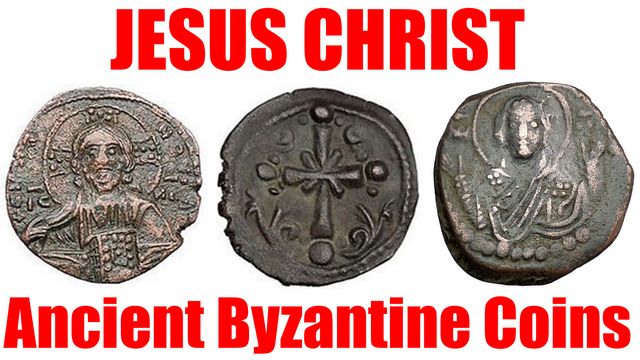
Explore the ancient coins with the portrait of Jesus Christ on large historical medieval numismatic coins of Christian emperors


https://www.youtube.com/watch?v=hSDa-HRmHD0

A Guide to Byzantine Coins from circa 969-1118 A.D.

For more than a century, the production of Follis denomination Byzantine coins was dominated with purely religious Christian motifs which included included Jesus Christ, and sometimes Virgin Mary. The Follis denomination coins were the largest bronze denomination coins issued by the Byzantine empire, and their large size, along with the Christian motif make them a popular coin type for collectors. This series ran from the period of Byzantine emperors John I (969-976 A.D.) to Alexius I (1081-1118 A.D.). The accepted classification was originally devised by Miss Margaret Thompson with her study of these types of coins. World famous numismatic author, David R. Sear adopted this classification system for his book entitled, Byzantine Coins and Their Values. The references about this coin site Mr. Sear’s book by the number that they appear in that work.  The class types of coins included Class A1, Class A2, Class B, Class C, Class D, Class E, Class F, Class G, Class H, Class I, Class J, Class K. Read more and see examples of these coins by reading the JESUS CHRIST Anonymous Class A-N Byzantine Follis Coins Reference.

Click here to see all the Jesus Christ Anonymous Follis coins for sale.
Click here to see all coins bearing Jesus Christ or related available for sale.
Press buttons CTRL and D together to bookmark this page.

Class A1

Byzantine Empire
Anonymous Class A1
Bronze Follis 22mm (2.99 grams) Struck 969-976 A.D.
under John I – Byzantine Emperor: 969-976 A.D.
Reference: Sear 1793
+ЄMMANOVHΛ – Bust of Christ facing, wearing nimbus crown (with two pellets in each limb of cross), pallium and colobium , and holding book of Gospels (the cover ornamended with central pellet in border of dots) with both hands; to left, IC; to right, XC.
+IhSЧS / XPISTЧS / bASILЄЧ / bASILЄ (“Jesus Christ King of Kings”) in four lines.


Class A2

Byzantine Empire
Anonymous Class A2
Bronze Follis 28mm (10.10 grams)
Struck during the joint-reign of Basil II and Constantine VIII 1025-1028 A.D.
Reference: Sear 1813
Bust of  Christ facing, wearing a nimbus crown, pallium and colobium, and holding book of Gospels with both hands.
+IhSЧS / XPISTЧS / bASILЄЧ / bASILЄ (“Jesus Christ King of Kings”) in four lines.

Class B

Byzantine Empire
Anonymous Class B
Bronze Follis 28mm (11.67 grams)
Struck during the reign of Romanus III 1028-1034 A.D.
Reference: Sear 1823
Bust of Christ facing , wearing a nimbus crown, pallium and colobium, and holding book of Gospels with both hands.
Cross, with pellet at each extremity, standing on three steps; in field, above transverse limbs of cross, IS -XS; beneath limbs, bAS – ILЄ, bAS – ILЄ (“Jesus Christ King of Kings”).


Class C

Byzantine Empire
Anonymous Class C
Bronze Follis 27mm (9.11 grams)
Struck during the reign of  Michael IV 1034-1041 A.D.
Reference: Sear 1825
+ЄMMANOVHΛ – Three-quarter length figure of Christ Antiphonetes standing facing, wearing nimbus crown, pallium and colobium, and raising right hand in benediction; in left hand, book of Gospels; in field to left, IC; to right, XC.
Jeweled cross cross, with pellet at each extremity; in the angles, IC -XC / NI – KA (“May Jesus Christ Conquer”).


Class D

Byzantine Empire
Anonymous Class D
Bronze Follis 30mm (8.86 grams)
Struck during the reign of Constantine IX 1042-1055 A.D.
Reference: Sear 1836
Christ seated facing on throne with back, wearing nimbus crown, pallium and colobium, and holding book of Gospels with both hands; in field to left, IC; to right, XC.
IS XS / bASILЄ / bASIL (“Jesus Christ King of Kings”) in three lines; above, cross.


Class E

Byzantine Empire
Anonymous Class E
Bronze Follis 26mm (8.43 grams) Constantinople mint: 1059-1067 A.D.
under Constantine X  – Byzantine Emperor: 25 December 1059 – 21 May 1067 A.D.
Reference: Sear 1855
Bust of Christ facing, wearing nimbus crown, pallium and colobium, and holding book of Gospels
with both hands; to left, IC; to right, XC.
IS XS / bASILЄ / bASIL’ (“Jesus Christ King of Kings”) in three lines, – + – above, -u- underneath.


Class F

Byzantine Empire
Anonymous Class F
Bronze Follis 25mm (7.76 grams) –
Struck under Constantine X – Byzantine Emperor: 25 December 1059 – 21 May 1067 A.D.
Reference: Sear 1856
Christ seated facing on throne without back, wearing nimbus crown, pallium and colobium, and raising right hand in benediction; in left hand, book of Gospels; in field to left, IC; to right, XC.
IS XS / bASILЄ / bASIL (“Jesus Christ King of Kings”) in three lines, – + – above, + beneath.


Class G

Byzantine Empire
 Anonymous Class G
Bronze Follis 28mm (7.71 grams)
Struck during the reign of  Romanus IV, Diogenes –
Byzantine Emperor: 1 January 1068 A.D. – 19 August 1071 A.D.
Reference: Sear 1867
Bust of Christ  facing , wearing a nimbus crown, pallium and colobium, and raising right hand in benediction; in left hand, scroll; to left, IC; to right, XC; border of large pellets.
Facing bust of the Virgin orans, nimbate and wearing pallium and maphorium; to left, MP; to right, ΘV; border of large pellets.


Class H

Byzantine Empire
Anonymous Class H
Follis 24mm (9.23 grams)
Struck during the reign of Michael VII
Emperor: October 24,1071 – March 24, 1078 A.D.
Reference: Sear 1880
Bust of Christ facing , wearing a nimbus crown, pallium and colobium, and raising right hand in benediction; in left hand, book of Gospels; to left, IC; to right, XC; normal border.
Patriarchal cross, with globule and two pellets at each extremity; in lower field, on either side, floral ornament.


Class I

Byzantine Empire
Anonymous Class I
BrBronze Follis 24mm (4.65 grams)
Struck during the reign of Nicephorus III – 24 March 1078 – 4 April 1081 A.D.
Reference: Sear 1889
Bust of Christ facing, wearing nimbus crown, pallium and colobium, and raising right hand in beneditcion, in left hand, the book of Gospels, IC to left, XC to right; within border.
Latin cross, with X at center, and globule and two pellets at each extremity; in lower field, on either side, floral ornament; in uppper field, on either side, crescent.


Class J

Byzantine Empire
Anonymous Class J
ByByzantine Follis 25mm (4.38 grams)
Struck during the reign of Alexius I, Comnenus
Byzantine Emperor: 4 April 1081 – 15 August 1118 A.D.
Reference: Sear 1900
Bust of Christ facing, cross behind head; He wears pallium and colobium, raises right hand in benediction, and holds book of Gospels in left; in upper field, C – C; in lower field, IC – XC.
Cross, with globule and two pellets at each extremity; beneath, large crescent; around, four globules, each surrounded by pellets.
* Numismatic Note: Alexius I was the Byzantine emperor during the time of the First Crusade.


Class K

Byzantine Empire
Anonymous Class K
BrBronze Follis 22mm (6.75 grams)
Struck during the reign of Alexius I, Comnenus
Byzantine Emperor: 4 April 1081 – 15 August 1118 A.D.
Reference: Sear 1901
Bust of Christ facing , wearing a nimbus crown, pallium and colobium, and raising right hand in benediction; in left hand, book of Gospels; to left, IC; to right, XC; border of large pellets.
Three-qauarter length figure of the Virgin orans, nimbate and wearing pallium and maphorium; on either side of nimbus, M – Θ or MP – ΘV; border of large pellets.
* Numismatic Note: Alexius I was the Byzantine emperor during the time of the First Crusade.


Class L

Byzantine Empire
Anonymous Class L
Bronze Follis
Struck during the reign of Alexius I, Comnenus
Byzantine Emperor: 4 April 1081 – 15 August 1118 A.D.
Reference: Sear 1902
Bust of Christ facing, wearing nimubs corwn, pallium and colobium; infield to left, IC; to right, XC.
Cross pattee; above and beneath, IC/XC; on either side; NI – KA.


Class M

Byzantine Empire
Anonymous Class M
Bronze Follis
Struck during the reign of Alexius I, Comnenus
Byzantine Emperor: 4 April 1081 – 15 August 1118 A.D.
Reference: Sear 1903
Christ Enthroned Facing, wearing nimbus crown, pallium and colobium; in field to left, IC; to right, XC.
Jewelled cross, with three pellets at each extremity; beneath, large crescent.


Class N

Byzantine Empire
Anonymous Class N
Bronze Follis 26mm (6.61 grams)
NICEPHORUS BASILACIUS – Usurper: 1078 A.D.
Reference: Sear 1904; Numismatic Chronicle 1992, pp. 175-177
ΝΙΚΗΦω-ROC BAC, Bust of Christ facing, wearing nimbus crown, pallium and colobium, and raising right hand in benediction; in left hand, book of Gospels; to left, IC; to right, XC.
Patriarchal cross on base; in upper field, IC – XC; in lower field, NI – NA.

Additional Non-Anonymous Coins Featuring Jesus Christ

This section is to cover other coins that feature Jesus Christ that were issued featuring the emperor and at times other rulers and family members.

Constantine X & Eudocia 1059AD Ancient Byzantine Coin Jesus Christ i41773

 Constantine X  – Byzantine Emperor: 25 December 1059 – 21 May 1067 A.D. –
Bronze Follis 24mm (5.44 grams) Struck at the mint of Constantinople circa 1059-1067 A.D.
Reference: Sear 1853
┼ЄMMANOVHΛ. Christ standing facing on footstool, wearing nimbus crown, pallium and colobium, and raising right hand in benediction; in field to left, IC; to right, XC. –
┼KWN TΔ ЄVΔK AVΓO. Eudocia on left and Constantine, bearded on right standing facing, holding between them labarum, with cross on shaft, resting on three steps; each wears crown and loros.

Constantine X Ducas 1059AD Large Ancient Byzantine Coin JESUS CHRIST i467

 Constantine X – Byzantine Emperor: 25 December 1059 – 21 May 1067 A.D. –
Bronze Follis 30mm (10.38 grams) Struck at the mint of Constantinople circa 1059-1067 A.D.
Reference: Sear 1854
┼ЄMMANOVHΛ. – Bust of Christ facing, wearing nimbus crown, pallium and colobium, and raising
right hand in benediction; in left hand, book of Gospels; to left, IC; to right, XC.
┼KWN RACIΛЄVC O ΔOVK – Bust facing, bearded, wearing crown and loros,
and holding cross and akakia.

JESUS CHRIST Ancient 1068AD Christian Byzantine Romanus IV Follis Coin i48619

Byzantine Empire
Romanus  IV Diogenes – Emperor: January 1, 1068  A.D. – August 19, 1071 A.D. –
Bronze Follis 31mm (9.56 grams) Constantinople mint: 1068-1071 A.D.
Reference:   Sear 1866; B.M.C. 9-13
Bust of  Jesus Christ facing, dotted cross behind head, wearing pallium and colobium,  and holding book of Gospels with both hands; in field, IC – XC / NI – KA (“May  Jesus Christ Conquer”).
Cross, with globus and two pellets at each extremity, and X at center; in the  angles, C – R / P – Δ.

JESUS CHRIST Ancient Christian Byzantine Nicephorus III Follis1078AD Coin i48623

Byzantine Empire
Nicephorus III Botaneiates –  Emperor: March 24,  1078 –  April 4, 1081 A.D.
Bronze Follis 24mm (5.51 grams) Constantinople mint: 1078-1081 A.D.
Reference:   Sear 1888
Three-quarter length figure of  Jesus Christ standing facing, wearing nimbus crown, pallium and colobium, and raising right hand in benediction; in left hand, book  of Gospels; in field to left, IC over large star; to right, XC over large star.
Cross, with globule at each extremity; at center, circle containing star of  eight rays; in the angles, C – Φ / N – Δ.

JESUS CHRIST Ancient 1143AD Christian Byzantine Manuel I Tetarteron Coin i48626

Byzantine Empire
Manuel I, Comnenus – Emperor: 8 April 1143 – 24 September 1180 A.D. –
Bronze Half Tetarteron 18mm (2.02 grams) Struck at the mint of Thessalonica circa 1143-1180 A.D.
Reference: Sear 1978; B.M.C. 64-6; R. 2150
Bust of Jesus Christ facing, beardless, wearing nimbus crown, pallium and colobium, and raising
right hand in benediction; in left, scroll; to left, IC; to right, XC.
MANYHΛ ΔΕCΠΟΤH, Manuel, bearded, standing facing, wearing crown and military attire
and holding cruciform scepter and globe cross.


See also:


Download this article by right-clicking here and selecting save as

Article by Ilya Zlobin, world-renowned expert numismatist, enthusiast, author and dealer in authentic ancient Greek, ancient Roman, ancient Byzantine coins and beyond.


https://www.youtube.com/watch?v=hSDa-HRmHD0

Posted originally Here: REFERENCE & Video Guide to ANONYMOUS Jesus Christ Portrait Byzantine Coins
Fascinating video pertaining to collecting old coins. An expert numismatist published this for educational purposes.


from Authentic Ancient Greek Roman Biblical World Coins for Sale You Can Buy on eBay https://authenticancientgreekromancoinsforsaleyoubuyonline.wordpress.com/2018/01/10/reference-video-guide-to-anonymous-jesus-christ-portrait-byzantine-coins-4/
via https://authenticancientgreekromancoinsforsaleyoubuyonline.wordpress.com

from Bella Dearcy https://belladearcy.tumblr.com/post/169551314811
via https://belladearcy.tumblr.com/
from Tumblr https://kaylaokeeffe.tumblr.com/post/169551401204

What We Can Learn from Ancient Coins & How They Influenced Our Modern World

Ancient Coins. What We Can Learn. How Coins Changed Us.

https://www.youtube.com/watch?v=r42ACDo3CJo

About the Video

Ancient coin expert, Mike Markowitz gets interviewed about ancient coins and their role in the creation of Western civilization. He explains how ancient coins were works of art in their own right and how it is a miracle a coin survived to our modern times. Some of the topics he covers are the symbolism on coins and what it was like to live in the ancient world fraught with danger. A great must-watch video for those interested in ancient Greek and Roman coin collecting.

Where to See More Ancient Coins

Visit http://stores.ebay.com/Authentic-Ancient-Greek-Roman-Coins for a selection of thousands of authentic ancient Greek, Roman, Biblical, Byzantine and even World coins.


Download this article by right-clicking here and selecting save as

Article by Ilya Zlobin, world-renowned expert numismatist, enthusiast, author and dealer in authentic ancient Greek, ancient Roman, ancient Byzantine coins and beyond.

For more great articles and videos on ancient coins, visit, https://www.trustedancientcoins.com/articles/ or Click here to see all of my EDUCATIONAL COIN VIDEOS


Visit Original Article Here: What We Can Learn from Ancient Coins & How They Influenced Our Modern World
An interesting article pertaining to ancient coin collecting. An ancient coin expert created this to educate people.


from Authentic Ancient Greek Roman Biblical World Coins for Sale You Can Buy on eBay https://authenticancientgreekromancoinsforsaleyoubuyonline.wordpress.com/2018/01/10/what-we-can-learn-from-ancient-coins-how-they-influenced-our-modern-world-4/
via https://authenticancientgreekromancoinsforsaleyoubuyonline.wordpress.com

from Bella Dearcy https://belladearcy.tumblr.com/post/169550723381
via https://belladearcy.tumblr.com/
from Tumblr https://kaylaokeeffe.tumblr.com/post/169550954959

Arabia Coins

http://bit.ly/arabiacoins

Visit Original Article Here: Arabia Coins
An interesting video about collecting old coins. An expert numismatist published this to teach.


from Authentic Ancient Greek Roman Biblical World Coins for Sale You Can Buy on eBay https://authenticancientgreekromancoinsforsaleyoubuyonline.wordpress.com/2018/01/10/arabia-coins-4/
via https://authenticancientgreekromancoinsforsaleyoubuyonline.wordpress.com

from Bella Dearcy https://belladearcy.tumblr.com/post/169542374931
via https://belladearcy.tumblr.com/
from Tumblr https://kaylaokeeffe.tumblr.com/post/169543228814

COINS of ARABIA – Arab Caravan Kingdom of Nabataea Explored in Video GUIDE Article

Ancient Coins of ARABIA – Arab Caravan Kingdoms Greek Roman Times

Learn more about the Types of Coins issued by the Kingdom of Nabataea of ancient Petra in Jordan and the Greek and Roman coins

https://www.youtube.com/watch?v=dQGrbChG7Hs

Ancient Arabia from circa 250’s B.C. to circa 250 A.D. is an interesting topic to explore. There were many different types of coins issued. One of the most powerful kingdoms of the area was the Kingdom of Nabataea. This was a kingdom based in the middle of the desert and was known as a Caravan Kingdom as a lot of caravans passed through there on their way from further south and even east. The kingdom prospered and to this day, the ruins that are left from that time period are gorgeous and an archeological site of importance.

Arabia was to the south of ancient Jerusalem and is therefore an important neighbor that has played a role in ancient biblical history. The Romans at one point consolidated all of Arabia into a province with same name, ending the Kingdom of Nabataea along with others.

The goal of this guide is to explore many different types of ancient coins.

Educational Video about Ancient Petra

This is a great video about the topic of ancient Petra with breathtaking views. Great to watch before looking at the coins to understand their context.

Anonymous Arab Kingdom of Nabataea PETRA 270BC Athena Nike Greek Coin i46676

Arab Kingdom of Nabataea, Anonymous
Bronze 16mm (4.04 grams) Petra mint, circa 270-72 B.C.
Reference: HGC 10, 671; Meshorer, Nabataea 1-4
Helmeted head of Athena right.
Nike advancing left, holding wreath and cornucopia; crescent above Λ in field to left.The northern kingdom of Arabia of the Nabataean people, with Petra being the capital existed until early 2nd century A.D. when Roman emperor Trajan created the province of Arabia.

ARABIA Saba Kingdom 160BC Owl as Athens Silver Ancient Greek Coin RARE i47784

 Arabia Kingdom of Saba
Silver ‘Tetradrachm’ 28mm (4.87 grams) Struck circa 160-130 B.C.
Reference: HGC 10, 725; Munro-Hay 1.13il
Laureate male head with long hair right.
Owl standing right on amphora; monograms to left and right.* Numismatic Note: The coins of this kingdom use the reverse similar to the “New Style” tetradrachm coins of Athens, and what the obverse ostensibly is similar to the Roman Republican L. Calpurnius Piso Frugi denarius or perhaps a royal portrait.

Pompey the Great General Beats Aretas III Arab Nabatea Silver Roman Coin i46389

Roman Republic M. Aemilius Scaurus and Pub. Plautius Hypsaeus moneyer
Silver Denarius 18mm (3.68 grams) Rome mint at Rome 58 B.C.
Reference: Aemilia 8; B.M.C. 3878; Syd. 913; Craw. 422/lb; Hendin 1443
M . SCAVR / AED CVR above king Aretas kneeling beside a camel r., EX on ,
S . C on right, REX ARETAS in exergue.
HYPSAE (vs) / AED CVR above Jupiter in quadriga left, CAPTVM on right,
c. HYPSAEVS cos PREIV (ER) in ex. scorpion below horses.This coin commemorated the victory over Aretas III by Pompey the Great’s general, Marcus Aemilius Scaurus. King Aretas III was an ally and supported John Hyrcanus II in war against his brother, Aristobulus II. Upon defeat, King Aretas had to pay a massive sum of 300 talents as a fine to Pompey the Great. M. Aemilius and Pub. Plautius were curule aediles together in 58 B.C. It is interesting to note that this is one of the earliest types that had the moneyer commemorate their own accomplishments on a coin.”Aristobulus was not able to make resistance, but was deserted in his first onset, and was driven to Jerusalem: he also had been taken at first by force, if Scaurus, the Roman general, had not come and seasonably interposed himself and raised the siege.” (Josephus, Wars, 1, VI:2)
Click here to see all coins of the Roman Republic for sale
or read the Guide to the Coins of the Roman Republic

King Syllaeus of Arab Caravan Kingdom of Nabataea Ancient Greek Type Coin i50391

Arab Kingdom of Nabataea
Syllaeus – King: 9 B.C.
Bronze 15mm (2.49 grams) Petra mint, Struck 9 B.C.
Reference: Meshorer, Nabataea 42
Diademed head of Obodas III right.
Two cornucopiae crossed.

ARETAS IV 9BC Arab Kingdom of Nabataea Authentic PETRA Ancient Greek Coin i46668

Arab Kingdom of Nabataea
Aretas IV – King: 9 B.C. – 40 A.D.
Bronze 16mm (2.00 grams) Petra mint, Struck circa 4 B.C. – 1 A.D.
Reference: Meshorer, Nabataea 70
Laureate head right, Aramaic het in front.
Crossed cornucopiae; Aramaic het between.

ARETAS IV & SHAQUILATH Arab Kingdom of Nabataea PETRA Ancient Greek Coin i46666

Arab Kingdom of Nabataea
Aretas IV Aretas IV, with Shaqilath
Bronze 15mm (2.63 grams) Petra mint, circa 11-40 A.D.
Reference: Meshorer, Nabataea 97
Aretas standing facing, head left, wearing military attire, holding spear and placing hand on hilt of sword; palm frond to left, monogram to right.
Shaqilath standing left, raising hand; wreath to left; to right, name in Aramaic in three lines.

Arab Kingdom of Nabataea ARETAS IV & SHAQUILAT PETRA Ancient Greek Coin i466722

Arab Kingdom of Nabataea
Aretas IV King Aretas IV with Queen Shaqilath
Bronze 20mm (4.36 grams) Petra mint, circa 11-40 A.D.
Reference: Sear GIC 5699; B.M.C. 28.8,15; Meshorer, Nabataea 114
Conjoined bustsr right of Aretas, laureate, and Queen Shaqilath, draped; Aramaic letters in field.
Two cornucopiae, crossed; between them, Aramaic legend = ‘Aretas, Shaqilath’ in three lines.

Arab Kingdom of Nabataea ARETAS IV & SHQUILATH Silver Ancient Greek Coin i46670

Arab Kingdom of Nabataea
Aretas IV – King: 9 B.C. – 40 A.D.
Debased Silver Drachm 16mm (3.28 grams) Petra mint: 11 A.D.
Reference: Sear GIC 5695; Cf. Meshorer, Nabataea 100
Laureate bust of Aretas right; around, Aramaic legend = ‘Aretas, king of Nabataea, lover of his people’.
Conjoined draped busts right of Aretas, laureate, and Queen Shaquilath; around, Aramaic legend = ‘Shaquilath, queen of Nabataea, year 20’ (= c. A.D. 11).

Aretas IV Arab Kingdom of Nabataea PETRA 4BC Original Ancient Greek Coin i503900

Arab Kingdom of Nabataea
Aretas IV – King: 9 B.C. – 40 A.D.
Bronze 14mm (1.87 grams) Petra mint, circa 4/3 B.C.
Reference: Meshorer, Nabataea 77 var. (o instead of ﬣ on obverse)
Laureate head of Aretas IV right, in field to right, ﬣ.
Two cornucopia crossed; in field on right, ﬣ, on left, o.

ARETAS IV 9BC Arab Kingdom of Nabataea Authentic Ancient PETRA Greek Coin i466777

Arab Kingdom of Nabataea
Aretas IV – King: 9 B.C. – 40 A.D.
Bronze 14mm (2.41 grams) Petra mint
Reference: Meshorer, Nabataea, 61A
Laureate head right.
Two cornucopias with palm; Aramaic inscription around.

Aretas IV Arab Kingdom of Nabataea PETRA 4BC Original Ancient Greek Coin i503855

Arab Kingdom of Nabataea
Aretas IV – King: 9 B.C. – 40 A.D.
Bronze 13mm (2.24 grams) Petra mint, circa 4/3 B.C.
Reference: Meshorer, Nabataea 68
Laureate head of Aretas IV right.
Two cornucopia crossed; monogram (= ﬣﬧ) between.

King Aretas IV of Arab Caravan Kingdom of Nabataea Ancient BibleTime Coin i50387

Arab Kingdom of Nabataea
Aretas IV – King: 9 B.C. – 40 A.D.
Bronze 14mm (2.04 grams) Petra mint, Struck 4/3 B.C.
Reference: Meshorer, Nabataea 74 var.
Laureate head of Aretas IV right.
Two cornucopiae crossed; between them, o.

King Aretas IV of Arab Caravan Kingdom of Nabataea 4BC Ancient Bible Coin i504000

Arab Kingdom of Nabataea
Aretas IV – King: 9 B.C. – 40 A.D.
Bronze 15mm (2.20 grams) Petra mint, Struck 4/3 B.C.
Reference: Meshorer, Nabataea 76
Laureate head of Aretas IV right; in field, right, ח.
Two cornucopiae crossed between them, caduceus; on staff of caduceus, above, ח below, o; in field left, ח.

MALICHUS II & SHAQILATH II Arab Kingdom of Nabataea PETRA Rare Greek Coin i46669

Arab Kingdom of Nabataea
Malichus II – King: 40-71 A.D.
Malichus II and Queen Shaqilath II
Silver Drachm 15mm (3.73 grams) Petra mint, Struck circa 49 A.D.
Reference: Sear GIC 5702; Cf. Meshorer, Nabataea 134
Laureate bust of Malichus right; around, Aramaic legend = ‘Malichus the king, king of Nabataea, year 9’ (= circa A.D. 49)
Veiled and draped bust of Queen Shaquilath II right; around, Aramaic legend = ‘Shaqilath, his siter, queen of Nabataea’.

King Malichus II Arab Caravan Kingdom of Nabataea 64AD Greek Type Coin i50452

Arab Kingdom of f Nabataea<!–
Malichus II – King: 70-106 A.D.
Bronze 16mm (2.73 grams) Petra mint, Struck 64/65 A.D.
Reference: Meshorer, Nabataea 140
Jugate heads of Malichus II and Shuqailat II right, the king laureate, with hair hanging down to nape of neck, wearing V-shaped ornament above forehead, the queen laureate; in field, ש מ .
Two cornucopiae crossed; between them, above and below, in three lines, inscription מלכן/שקי/לת  (Malichus/Shuqai/lat).

King Rabbel II Arab Caravan Kingdom of Nabataea 75AD Greek Type Coin i50401

Arab Kingdom of f Nabataea<!–
Rabbel II – King: 70-106 A.D.
Bronze 16mm (2.52 grams) Petra mint, Struck 75/76 A.D.
Reference: Meshorer, Nabataea 146
Jugate portraits of Rabbel II and Shuqailat right, both laureate, head of Rabbel with very long hair covering nape of neck, but of Shuqailat draped.
Two cornucopiae crossed; between them, above and below, in three lines, inscription רבאל/שקילת/אמה (Rabbel/Shuqailat/his mother)

ARABIA FELIX HIMYARITES Yemen Ancient Silver Quinarius Greek-like Coin i39632

ARABIA FELIX – Under HIMYARITES
Scyphate Silver Quinarius 14mm (1.00 grams)
“RYDN” Royal Series. “‘MDN BYN” (Amdan Bayyin). Circa 80-100  A.D.
Reference: Malcom-Hay 3.4i; BMC Arabia pg. 71, 1; SNG ANS 1596
Male head right within torc; monogram behind.
“‘MDNIBYNI” around, “RYDN” in exergue, small head right; “sceptre” symbol before.

King Rabbel II Gamilat Arab Caravan Kingdom of Nabataea 101AD Greek Coin i5041717

Arab Kingdom of Nabataea<!–
Rabbel II – King: 70-106 A.D.
Bronze 17mm (3.47 grams) Petra mint, Struck 101/102 A.D.
Reference: Meshorer, Nabataea 163A
Jugate portraits of Rabbel II, his head laureate, with particularly long hair coming down to nape of neck, undraped, and of Gamilat, laureate, her bust draped.
Two cornucopiae crossed; between them, in two lines, inscription רבאל/גמלת (Rabbel/Gamilat).

TRAJAN creates ARABIA Province 112AD Camel Ancient Silver Roman Rome Coin i53225

TrajanRoman Emperor : 98-117 A.D. –
Silver Denarius 19mm (3.01 grams) Rome mint: 112 A.D.
Reference: RIC 245; BMCRE 474. Cohen 26 (3 Fr.)
IMP TRAIANO AVG GER DAC P M TR P COS VI P P, Laureate, draped bust right left shoulder.
S P Q R OPTIMO PRINCIP Exe: ARAB ADQ, Arabia standing, facing, holding branch
and cinnamon sticks; camel to left.

SEVERUS ALEXANDER 222AD Bostra Arabia Zeus-Ammon Ancient Roman Coin i38501

Severus AlexanderRoman Emperor: 222-235 A.D.
Bronze 18mm (5.32 grams) of Bostra in Arabia
Reference: Kindler 38; Spijkerman 48; Rosenberger 41; SNG ANS 1222
Laureate, draped, and cuirassed bust of Severus Alexander right, seen from behind.
Draped bust of Zeus-Ammon right. 

PHILIP I the ARAB 248AD 1000 Years of Rome Wolf Twins Silver Roman Coin i5217070

 Philip I ‘the Arab’Roman Emperor: 244-249 A.D. –
Silver Antoninianus 23mm (3.95 grams) Rome mint: 248 A.D.
Commemorating the 1000th anniversary of Rome
Reference: RIC 15; C 178
IMP PHILIPPVS AVG, radiate, draped, and cuirassed bust right
SAECVLARES AVGG / II, Lupa ( She-wolf) standing left, looking back to lick her suckling twins, Romulus and Remus.

Ancient Coins of ARABIA Nabataea Petra Caravan Kingdoms Greek & Roman Times


Ancient Roman Camp Gate CoinsDownload this article by right-clicking here and selecting save as

Article by Ilya Zlobin, world-renowned expert numismatist, enthusiast, author and dealer in authentic ancient Greek, ancient Roman, ancient Byzantine coins and beyond.

For more great articles and videos on ancient coins, visit, https://www.trustedancientcoins.com/articles/ or Click here to see all of my EDUCATIONAL COIN VIDEOS

See Full Article Here: COINS of ARABIA – Arab Caravan Kingdom of Nabataea Explored in Video GUIDE Article
Informative article pertaining to world coins. An ancient coin expert published this to teach.


from Authentic Ancient Greek Roman Biblical World Coins for Sale You Can Buy on eBay https://authenticancientgreekromancoinsforsaleyoubuyonline.wordpress.com/2018/01/10/coins-of-arabia-arab-caravan-kingdom-of-nabataea-explored-in-video-guide-article-4/
via https://authenticancientgreekromancoinsforsaleyoubuyonline.wordpress.com

from Bella Dearcy https://belladearcy.tumblr.com/post/169542374691
via https://belladearcy.tumblr.com/
from Tumblr https://kaylaokeeffe.tumblr.com/post/169543228634